From the Spring 2026 Journal of the Colorado Dental Association: By Nicole Wirth, Maj, USAF, DC, 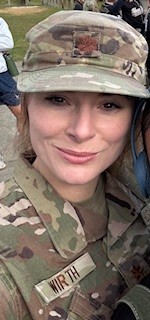 AEGD-1 Deputy Director
When civilians hear that I’m in the military, the first thing they ask is, “So what do you do?” When I reply, “I’m a dentist,” the responses are typically ones of confusion and surprise. The majority of the civilian population doesn’t realize that the military has its own separate dental corps focused on treating our military men and women. To be honest, I didn’t know that either prior to dental school.
So why military dentistry? I truly believe military dentistry is a career path that offers the best of both worlds: the ability to practice high-quality dentistry while serving something bigger than yourself. It combines clinical excellence, leadership, travel, education and meaningful service in a way that’s hard to replicate in the civilian world. For many dentists, it’s not just a job — it’s an experience that shapes both their professional and personal lives.
One of the most refreshing parts of military dentistry is the freedom to focus purely on what’s best for the patient. In private practice, treatment plans are often influenced by insurance coverage, reimbursement limitations or financial constraints. In the military, those barriers are largely removed. Dentists can recommend the ideal treatment plan based on sound clinical judgment and what’s best for the patient’s long-term oral health. There’s no need to worry about insurance denials or whether a patient can afford a procedure. The focus is simply on doing excellent dentistry. That kind of freedom allows providers to practice the way they were trained and to feel confident that their decisions are based on up-to-date evidence-based research.
Another incredible advantage is the opportunity for advanced dental education. Through programs in every branch of the U.S. military, dentists can pursue Advanced Education in General Dentistry (AEGD), or specialty training in fields like oral surgery, endodontics, periodontics, orthodontics, etc. What makes this especially appealing is that these programs are fully funded. Dentists continue to receive a salary and benefits while training, without taking on additional tuition debt. This allows residents to focus their time and energy on advancing their education and skillset to better serve our military men and women.
Beyond the clinic and classroom, military dentistry opens the door to humanitarian and deployment opportunities. Service members can participate in global health missions, providing dental care to underserved communities around the world. Whether it’s underserved populations in the U.S. or in other countries like Mongolia, treating patients who have had little to no prior access to dental care is life-altering for both the patient and provider. It requires creativity, adaptability, and hard work; the impact is unforgettable —reminding you why you chose dentistry in the first place.
Another unique aspect of military dentistry is the opportunity to deploy. While deployments, in general, can feel daunting at first, many dentists describe it as one of the most professionally rewarding experiences of their careers. I personally had the opportunity to “deploy” to New Mexico during Operation Allies Welcome. Working out of a 10-tent field hospital with mobile dental units, using handheld imaging systems and tabletop sterilizers, performing dental care on individuals who had never experienced modern dental care was eye-opening, to say the least. I remember treating a young male who presented with an oral cutaneous fistula on his left cheek caused by an odontogenic infection on #19. The patient stated that he had this open wound with purulence draining from his cheek for over a year and that he never sought treatment due to dental anxiety. Within 15 minutes, the offending tooth was extracted and within a week the fistula had closed and his face returned to normal. The tears in his eyes when he expressed his gratitude were heartwarming and life-altering.
Deployments build resilience and allow for personal and professional growth in ways that are difficult to replicate elsewhere. Dentists serve not only as clinicians but also as officers responsible for leading teams and supporting the broader mission. The camaraderie formed in these environments is unique, and the sense of shared purpose is powerful. You quickly realize you’re part of something much larger than yourself.
Military dentistry also brings variety and adventure. Assignments can take you across the country or internationally, exposing you to diverse patient populations and new professional challenges. Each duty station offers opportunities to grow, meet new friends and colleagues, and expand your perspective both clinically and culturally. I personally have had the opportunity to live in Japan and travel throughout the Indo-Pacific, experiencing new countries and unique cultures, which has been an invaluable life lesson for my children.
In the end, military dentistry offers a rare combination of clinical freedom, advanced education, humanitarian service, leadership development and adventure. From providing ideal treatment plans without financial pressure to serving on a mission in Mongolia or deploying in support of fellow service members, the experiences are meaningful and lasting. For dentists who value growth, purpose, and the chance to serve, military dentistry is not just a career — it’s an incredibly fulfilling journey.
Maj Nicole Wirth is the AEGD-1 Deputy Director at the United States Air Force Academy. She graduated from Arizona School of Dentistry and Oral Health in 2017. After commissioning in the AF, she completed her two-year AEGD education in San Antonio, TX and became a board-certified comprehensive dentist. In her career, she has been stationed in San Antonio, TX; San Angelo, TX; Okinawa, Japan; and is now stationed in Colorado Springs, CO where she loves spending time with her family, hiking, reading, and running.