From the 2026 Fall Journal of the Colorado Dental Association
By Sheryl K. Bridges, Spencer Fane LLP, General Counsel for the Dentists Professional Liability Trust; and Terry Cipoletti, Spencer Fane LLP

 In today’s age of social media, instant virtual sharing and cell phone cameras, we should all expect to be captured on video at some point as we go through our everyday lives. But does the prevalence of these “sometimes incidental” recordings translate to permission for dentists to obtain footage of their patients without their patients’ knowledge? What if the dentist wants to record solely for purposes of patient and staff security? Regardless of the reason, there are circumstances where video and/or audio recordings might be permitted, and circumstances where the answer is less clear.
Colorado is a one-party-consent state, meaning that conversations between individuals can be recorded if one party consents, even if that one party is the one recording without telling the other party. But this alone does not answer the question of whether and what recording is permissible outside of or within the dental office suite. Both federal and Colorado law recognize a provider-patient privilege, and Colorado also has enacted laws preventing wiretapping/eavesdropping, which serve to protect oral communications where the person speaking has an expectation of privacy. Because a patient will have a varying expectation of privacy during many aspects of their dental visit, from entrance to the office, to communications with their provider, to discussion with the front desk at the conclusion of their visit, the assessment of whether and when video and/or audio surveillance may be had is not black and white. Nor is it the same for all aspects of a patient’s encounter. In this article, we address various surveillance considerations regarding the three locales typical of a dental visit: 1. outside of the office, 2. within the office but not in the operatory, and 3. within the operatory. We then discuss potential legal ramifications if a patient’s privacy rights or expectations are breached.
- Outside of the office
While there can be many shades of gray as far as what may or may not be legal with recordings, outside-facing surveillance is the closest to black and white that this issue gets. Regardless of whether the people walking outside your office are patients, Colorado law is clear that individuals do not typically have a reasonable expectation of privacy when walking on a public sidewalk, or even while walking up the steps to your public-facing door to your private office building. Surveillance that captures public spaces is commonplace in today’s world; many homes have doorbell cameras, and street intersections have cameras collecting video feed to identify drivers violating traffic laws. This is acceptable because an individual’s expectation of privacy is low in public spaces. Moreover, recordings of communications between a dentist and patient that are confidential under both HIPAA and the provider-patient privilege are unlikely to occur in a public space. The practice’s employees are also not likely to have in-person conversations with a patient outside of the office. As such, in most cases, cameras capturing the area outside a dental office building or suite do not typically raise confidentiality or other legal concerns.
- Within the office (but outside of the operatory)
Shared spaces within the office, such as a waiting room or hallway, carry a higher expectation of privacy than public spaces outside. If the surveillance in these areas is video only, however, there should be little concern that a video in a shared space of the office invades the provider-patient privilege, violates HIPAA confidentiality protections, or raises legal questions under Colorado’s wiretapping or eavesdropping laws. However, keep in mind that video capturing images in which a patient can be identified, including showing their face, contains protected health information and needs to be safeguarded. Audio surveillance presents a greater challenge. Patients and others in a waiting room might not have a complete expectation of privacy, but there are often conversations that occur at the front desk, for example, that could be captured on audio and serve to identify the patient and reveal aspects of their protected health information (e.g., the reason for their appointment, future expected dental work, payment for services or when they need to return). Accordingly, and while exceptions may exist, audio recording in shared space within the office raises significant privacy concerns and is not typically recommended — certainly not without adequate notice.
If video (or any) surveillance recording is used in a shared space, dentists will want to post clear and conspicuous notice to individuals within that space. The notice should inform visitors of the general locations of the cameras (the waiting room, the public hallway, the front door, etc.) and should be easy to see and read. Dentists may also consider incorporating an acknowledgement of understanding of the use of video surveillance in these areas in the initial paperwork the patient signs. This notification and acknowledgement can be included with the Notice of Privacy Practices, or it can be created as a separate document the patient is asked to sign at their first visit.
If any audio or video surveillance is recorded and thus kept for any period of time, the recording(s) should only be available to employees who have a business need for access. Likewise, if such recording(s) are subpoenaed by law enforcement or any other person or entity, the practice should review the footage and seek legal counsel before providing any recording(s), particularly if any production would result in person(s) other than the patient at issue being identified (if such disclosure to law enforcement or others is even permissible). It is good practice to have a policy about how long any video (or audio) obtained by the practice, in any locale, will be kept and to understand who outside the practice might have access. The practice should have a Business Associate Agreement with any company providing the surveillance software or storage of the recording(s) if such company may have access to the recordings.
- In the operatory
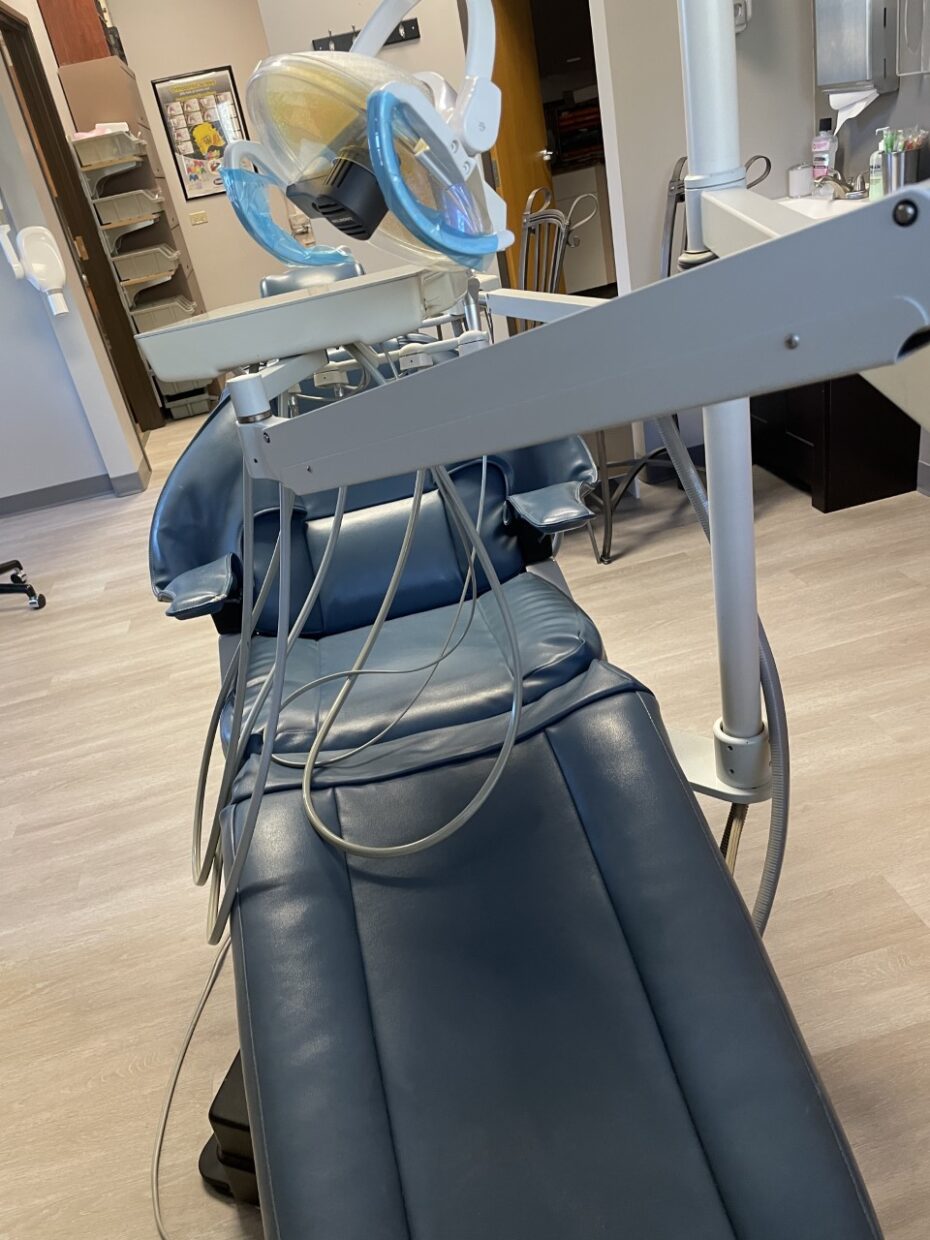
Without question, the operatory is the place within a dental practice where a patient’s expectation of privacy is highest due to treatment being performed and private conversations occurring between the patient and practitioner. The question of video surveillance/recording by healthcare professionals in examination/treatment rooms raises potential concerns, including that medical providers see patients who may have to disrobe. In the dental setting, however, because patient disrobing should not be a concern, the primary consideration regarding video surveillance/recording in the operatory is one of consent and knowledge by the patient. Similarly, audio recording, particularly if done for purposes of ensuring accurate documentation of the patient encounter, is also an issue of consent and knowledge by the patient. With the increased prevalence of Artificial Intelligence in the healthcare field, we expect audio recording, in particular through phones (with security and encryption safeguards) or other means, may trend toward becoming the norm for provider documentation. Ensuring patient consent for any type of recording is paramount. And if recordings are being preserved in any fashion, there should be appropriate safeguards in place, as discussed earlier in this article.
Consent for recording in the operatory may be obtained in a number of ways, including via the Notice of Privacy Practices and/or a separate document signed at the patient’s first visit. It is also a good practice before the dental care begins and before any audio or video recording begins to have a conversation to obtain and document the patient’s oral consent. Another good practice is to ensure that any recording system used in the operatory can be easily turned on and off by the provider, rather than using a system that is perpetually running, particularly if the audio/video feed is being recorded and/or is available for real-time viewing or review.
Potential Legal Ramifications
HIPAA is perhaps the most well-recognized law when it comes to patient privacy. Regarding the issue of surveillance, the most likely potential HIPAA violation arises from the collection of surveillance that is shared (intentionally or unintentionally) with a third party, including other patients or entities with whom there is no Business Associate Agreement, and that allows for the identification of patients and/or the disclosure of confidential patient information. There is no private right of action under HIPAA, meaning an individual patient typically cannot pursue their own claim for violation of HIPAA, but individuals will still point to HIPAA as setting a privacy standard if they bring a privacy breach lawsuit. Patients may also make privacy complaints that can be investigated by the Department of Health and Human Services Office for Civil Rights (OCR). OCR can, and does, enforce civil penalties (monetary fines) and require the adoption of corrective action plans, some of which can be quite onerous if a practice is not compliant with HIPAA’s privacy and safeguarding requirements involving patients’ protected health information.[1] OCR can also refer complaints to the U.S. Department of Justice for criminal investigation for particularly egregious violations or misuse of patients’ information.[2]
Colorado also penalizes wiretapping and eavesdropping. Violations are most likely to arise in the context of surveillance where a conversation or interaction is recorded without the patient’s knowledge, even if such conversation is not further disclosed. For example, wiretapping can occur where one party/entity “knowingly overhears . . . or records a telephone . . . communication without the consent of either a sender or a receiver.”[3] Eavesdropping can occur where someone (or some entity) not party to a conversation knowingly or intentionally “overhears or records such conversation or discussion” either without the consent of one of the primary parties involved or for the purpose of “committing, aiding, or abetting the commission of an unlawful act.”[4] Like HIPAA, there is no private right of action for wiretapping/eavesdropping in Colorado. However, given the legal definitions of what might constitute “wiretapping” or “eavesdropping,” under the right circumstances, a patient’s telephone conversation recorded from a location in the dental office where the patient has a reasonable expectation of privacy could potentially lead to allegations.[5] Wiretapping or eavesdropping in violation of Colorado law is a class 2 misdemeanor, which can result in fines and jail time.
In sum, while dental practices can engage in surveillance, patients’ reasonable expectations of privacy and ensuring proper notice and/or obtaining consent are of tantamount importance. Decisions of whether to surveil and how to do so require careful consideration as there is no one-size-fits-all rule or guidebook to follow. If you have any questions about whether your proposed surveillance scenario is acceptable under the law, or questions about how to reduce the likelihood that your surveillance practices will result in claims of privacy violations, we recommend you obtain legal counsel for further guidance.
Sheryl Bridges and Terry Cipoletti are attorneys with the law firm Spencer Fane LLP. Both routinely defend and counsel licensed healthcare professionals, including with regard to patient privacy and confidentiality considerations. Sheryl Bridges also serves as general counsel for the Dentists Professional Liability Trust.
The information provided in this article is for general informational purposes only and does not constitute legal advice. Your review/consideration of this article does not create an attorney-client relationship with Ms. Bridges or Mr. Cipoletti, or their law firm, Spencer Fane LLP. State and federal law, as well as guidance, change over time, and analysis of issues relevant to these laws is often very fact- and site-specific. You should not act or refrain from acting based on any information in this article without seeking professional counsel from a licensed attorney.
[1] See e.g., 45 C.F.R. ¶¶ 160.402 & 160.404.
[2] See e.g., 42 U.S.C. ¶ 1320d-6(b).
[3] C.R.S. ¶ 18-9-303(1)(a).
[4] C.R.S. ¶¶ 18-9-304(1)(a) & (b).
[5] The federal Electronic Communications Privacy Act (ECPA) has similar, but nuanced, provisions that may come up in the context of general office surveillance, but more typically litigated in that setting with regard to surveillance of employees. Nevertheless, the ECPA cannot be excluded from consideration as carrying possible applicability to office surveillance under the right circumstance, particularly where there exists a reasonable expectation of privacy and a potential lack of knowledge and/or consent by the recorded party. See e.g., 18 U.S.C. ¶ 2511(1)(a).